Showing posts with label Music. Show all posts

Tuesday, February 5, 2008

Suggested Listening


I bought Alex Ross’s The Rest Is Noise: Listening to the Twentieth Century this Christmas, and spent the last month collecting the “Suggested Listening” listed in the back of the book. The recordings are a revelation, but instead of waxing ecstatically about his choices, I thought I’d perform an homage and try to make my own.

Ross isn’t promoting a list of essential recordings or desert island discs, and beyond their inclusion in his book, the choices do not seem to establish a unified musical aesthetic (except that they’re classical, and mostly notational). And yet grouping them together under one roof creates an inspiring and magical context for listening to diverse styles of classical music in a thoroughly enjoyable way. Even when the music is difficult, the context isn’t about innovation, progress or the future of “serious” music: it’s about enjoyment, beauty and pleasure.

With that in mind, I made a list of 15 jazz records that contextualize what I love about contemporary jazz. I will define contemporary jazz as jazz performed in a style that postdates what I understand to be the "common knowledge" or standard jazz canon. I do not intend this to dismiss or replace that jazz canon, but I can add that I like these recordings just as much as those (mostly) modernist jazz classics. This is not “The Best Jazz Records 1969-2001,” or most influential, or most innovative. It is just a very personal “Suggested Listening,” full of omissions, and as such is merely a starting point for anyone interested. One list among many, I hope.

In alphabetical order followed by release dates:

1. James Carter, Chasin’ the Gypsy (2000)
2. Ornette Coleman, Dancing in Your Head (1977)
3. Miles Davis, Filles De Kilimanjaro (1969)
4. Dave Douglas, Parallel Worlds (1993)
5. Bill Evans, The Paris Concert, Edition One (1983)
6. Andrew Hill, Nefertiti (1976)
7. Keith Jarrett, Belonging (1974)
8. John Lewis, Evolution (1999)
9. Nils Petter Molvaer, Solid Ether (2001)
10. David Murray, Morning Song (1984)
11. Art Pepper, Winter Moon (1980)
12. Don Pullen, Healing Force (1975)
13. Sonny Rollins, This Is What I Do (2000)
14. James Blood Ulmer, Odyssey (1983)
15. David S. Ware, Earthquation (1994)

Wednesday, September 5, 2007

Pullen at Destination: Out

Check out this beautiful appreciation of Don Pullen at Destination: Out, posted on August 2. All I can add is an emphatic, "Yes!" These are many of the same basic points of my thesis. Props to writers and proprietors Chilly Jay Chill and Prof. Drew LeDrew (not joking). Note: read the comments.

Tuesday, September 4, 2007

Don Pullen Mixtape


Wes asked me for a mixtape covering some of the material I plan to discuss in my thesis. I gave it a shot, but got this instead. There’s plenty of Don Pullen, but fewer promised ‘80s jazz favorites. Maybe next time. Here’s my playlist and note to Wes:

‘80s Jazz? Well, almost. Perhaps “Don Pullen + Context” is better. Or “Pastiche, Vamps & Atmosphere.” Either way, it’s good. Dig in and enjoy.

1. Don Pullen, “Once Upon a Time” (New Beginnings, 1989)
2. Jan Garbarek & Bobo Stenson Quartet, “A.I.R.” (Witchi-Tai-To, 1973)
3. Don Pullen, “Healing Force” (Healing Force, 1975)
4. Jaki Byard, “Nocturne for Contrabass” (Freedom Together!, 1966)
5. Matthew Shipp, “Galaxy 105” (Harmony and Abyss, 2004)
6. James Blood Ulmer, “Love Dance” (Odyssey, 1983)
7. Don Pullen & George Adams Quartet, “Just Foolin’ Around” (Breakthrough, 1986)
8. Hank Crawford & Jimmy McGriff, “One Mint Julep” (The Best of Hank Crawford & Jimmy McGriff, 1986)
9. David Murray, “Milano Strut” (Shakill’s Warrior, 1991)
10. Sonny Sharrock, “Broken Toys” (Guitar, 1986)
11. Craig Taborn, “The Golden Age” (Junk Magic, 2004)

Notes: Gary Peacock (Ayler, Jarrett) and Tony Williams (Miles, his own bad self) accompany Pullen on “Once Upon a Time.” Pullen and Adams’s quartet (here playing “Just Foolin’ Around”) includes Dannie Richmond, who played consistently with Charles Mingus from the late fifties to Mingus’s death in 1979, then with Pullen and Adams until Richmond’s death in 1988. Pullen wrote “Milano Strut,” and plays organ with David Murray on this session from 1991; Andrew Cyrille (Cecil Taylor) is on drums. “Healing Force” is performed unaccompanied, and is the title track from one of Pullen’s own favorite recordings (and mine). Oh, and that’s George Benson on Crawford and McGriff’s “One Mint Julep.” Weird.

Friday, August 31, 2007

Close to the Edge


As a white American male aged 30, I have a certain closeted affinity for the band Yes. Waiting for my wife to get home from work this Friday night, I opened a beer and threw on "Close to the Edge" for the umpteenth time, marveling at the minor thrill I get when musicians strive to make music sound more complicated than it ever needs to be. This thrill comes at a cost, of course: just like every other time I listen to "Close to the Edge," I completely zoned out after about 9 minutes—at the beginning of "I Get Up I Get Down," I think.

In his capsule review for Tales from Topographic Oceans, Christgau writes, "the whole is definitely less than the sum of its parts, and some of the parts are pretty negligible." He could just as well be reviewing "Close to the Edge," and yet I get a very strong and particular thrill from this song and album that I don't get from, say, something by Emerson, Lake and Palmer. Skeptics damn their virtuosity, but virtuosity doesn't tarnish The Inner Mounting Flame or Countdown to Ecstasy, and it doesn't usually tarnish Yes. And if their pomposity lacks taste or cool, at least its good-natured. So I love the thrill I get from Yes, even if it only lasts for half of a (20-minute) song (or less), and subjects me to some god-awful lyrics.

Speaking of god-awful, I urge fans to read the behind-the-scenes comments about Yes over at Wikipedia. Under the sub-heading "Incredibly Pretentious and Awful," fans discuss how to handle Yes's wealth of negative criticism. Fans dismiss the need for it, but bigger fans should want to include it. If you love them, a little bad press (and historical truth) can't hurt you, and more discussion is always far better than less. Yes is one of those great bands that made some terrible music. It's okay to embrace the truth.

Saturday, August 4, 2007

M.I.A.'s "Boyz"

If you haven't heard Arular, believe the hype. Becky and I do. Like early hip-hop, M.I.A. is both sonically avant-garde and completely accessible. And like any beautiful musical idea, M.I.A.'s style isn't a move towards complexity (e.g., Radiohead or Wilco), it's a move towards a different simplicity. Not that that simplicity is simple or easily obtained. In fact, making music sound difficult takes about an hour; making music sound simple takes years, sometimes a lifetime. Just ask Miles Davis or Duke Ellington. Or John Lennon. Or James Brown.

Anyway, her new single, "Boyz" could be catchier that "Sunshowers," or even "Bucky Done Gone." And it captures the world-wide musical zeitgeist better than Manu Chao, which is saying something. (His new single, "Rainin in Paradize," is great, too, by the way.) This may be my favorite video ever. If revolution can be this much fun, there may be hope for us yet.

Wednesday, June 27, 2007

Jazz in the Nineties


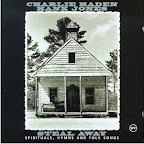
Be sure to check out the Best Jazz of the 1990s at Destination: Out. The weblog polled over a dozen jazz critics for their favorite albums of the nineties, and their replies are crazy diverse. Over the last few weeks, I collected an assortment of albums from a few different lists, and found revelations. I especially recommend Charlie Haden & Hank Jones's Steal Away, Andrew Hill's Dusk, Randy Weston's Saga, and Dave Douglas's Tiny Bell Trio and Constellations.

I consider Matthew Shipp, David S. Ware, Ornette Coleman, Sonny Sharrock, Henry Threadgill, Nils Petter Molvaer and Joe Morris my people, so I'm happy to nod in agreement with the critics polled. If you're less inclined, however, why not get acquainted? eMusic is a great place to start.

By the way, Tom Hull took the trouble to make lists for the seventies, eighties, and the new millennium. (If you don't see them, keep scrolling.)

Monday, June 11, 2007

Rhymes With Oranges


I listened back to The Eminem Show (2002) last night, and found the stanza in "Business" where Eminem rhymes “oranges,” with “hinges,” “syringes” and “I’m inches.” He places the accent on the second syllable of "oranges" for a cleaner rhyme. And if that’s not enough, he says each word as the first word in each line instead of the last word, though the last word rhymes, too, but with “plums” instead of "oranges."

Oh God, Saddam’s got his own Laden
With his own private plane, his own pilot
Set to blow college dorm room doors off their hinges
Oranges, peach, pears, plums
Syringes, [chainsaw sound] yeah here I come
I’m inches, away from you dear fear none
Hip-hop is in a state of 911

You can also interpret the “oranges” rhymes as one line of verse, alternating with longer lines rhyming with “plums.” That would be written like this:

Oranges
Peach Pear Plums
Syringes
Yeah, here I come

However, when rapped, these lines are unbroken, so neither transcription is accurate. Notice, too, how the first set of rhymes— “God," "Saddam," Laden,” “private,” “pilot” and “college”—share their first vowel sound rather than their last. It's not as evident when written, but it's obvious when heard. My god, this man is a monster!

Friday, June 8, 2007

Mixed Signals


I never listen to Rush anymore, but last month I was finishing up my semester at Rutgers and procrastinated by listening to Signals and starting this weblog. Now, I LOVED Rush in high school—I remember making a mixtape for a minor crush of mine that included only three bands over an hour and a half of tape: just R.E.M., Genesis and Rush. That poor girl! I love Document more than ever, but Genesis and Rush remain in my own private time capsule, beloved only for the memories.

I discovered rock criticism my freshman year of college, and was forcefully confronted by the cold truth that Rush was not the best band in the world. Critics hate these guys, and looking back, this was a profound moment for me because I needed to know why. And over the next fifteen years, I passionately devoted my time to learning why, by studying music and aesthetic theory, and now music history. I stopped thinking about Rush a decade ago, but the combustion that initial conflict created stays with me. I still love hearing why others love the music they love or hate the music they hate, and this is the reason why.

With that in mind, I was very surprised by the unexpected charge I got listening to Signals again after all these years. Rush is definitely a riff-based band, but unlike Led Zeppelin or AC/DC, they don’t have a particular aesthetic agenda: they’ll try anything. Listen to the keyboard riff from “Subdivisions,” the opening guitar figure from “Analog Kid,” or the faux-funk bass synthesizer from “New World Man.” Notice how each signifies as a novelty where other bands search for meaning or self-expression. I mean this as a compliment: a “novelty” can be clever, while “meaning” is often leaden or cumbersome—just because an artist wants to say something meaningful doesn’t mean that they ever do. I like the sound of musicians making shit up, and Signals is a mismatched hoot.

I also like Rush’s lack of taste: where Led Zeppelin is “cool,” Rush is “neat.” Think of Neil Peart moving the beat around underneath “Subdivisions,” or the deliciously overblown synthesized choirs of “Analog Kid.” If their melodies and riffs could be better, their heated group interaction sometimes makes up for it. And if the first six tracks win me over as sound, the unlistenable romanticized pessimism of “Losing It” reminds me songs have lyrics, and kills the momentum.

So, like my brethren, I obviously no longer think Rush is the best band in the world. But I’m thirty, and the world is complicated, and sometimes a thing can be both good and bad, and it’s okay to enjoy the good parts. But it's also hard to stomach the bad parts. Ain’t that a bitch.

Saturday, May 5, 2007

My Favorite Records


In my College Teaching class, we studied the impact of student self-evaluation, which is exactly what it sounds like: an exercise that requires the student to reflect on what they’ve learned, and how that knowledge is now integrated into their identity and worldview.

Of course, as a teenager raised on rock criticism, I conducted self-evaluations again and again by sorting out my favorite rock albums. Even today, a top ten list prompts a reappraisal of my aesthetic agenda, reconnects me to significant moments of growth in my life, and reaffirms my emotional and intellectual identity.

So, with that on the table here are my favorite records, picked and sequenced by how much joy each brings to my life, either by forever changing the way I see and hear the world, or for just being so good that they offer a surprise every time.

1. Steely Dan, Can't Buy a Thrill, Countdown to Ecstasy & Pretzel Logic
2. James Brown, Star Time
3. Sonny Rollins, Ken Burns Jazz & Silver City
4. DeBarge, In a Special Way
5. Billie Holiday, Ken Burns Jazz
6. Thelonious Monk, The Complete Prestige Recordings
7. Otis Redding, The Very Best of Otis Redding
8. X, Wild Gift
9. Billie Holiday & Lester Young, A Musical Romance
10. Ella Fitzgerald, Ken Burns Jazz
11. Rilo Kiley, More Adventurous
12. Arcade Fire, Neon Bible
13. Derek and the Dominos, Layla and Other Assorted Love Songs
14. Kanye West, Late Registration
15. Bruce Springsteen, Born in the U.S.A.
16. Franco, The Very Best of the Rumba Giant of Zaire
17. Chic, The Best of Chic, Vol. 2
18. Fountains of Wayne, Welcome Interstate Managers

A list of favorite albums is full of omissions: I love Miles Davis, John Lennon and The Rolling Stones as much as Otis Redding or Ella Fitzgerald, but I rarely go to one album over another. Conversely, I’m not an Eric Clapton fanatic, but I adore Layla. Top Ten lists are like that. Anyone else want to give it a shot?